Check out our White Paper Series!
A complete library of helpful advice and survival guides for every aspect of system monitoring and control.
1-800-693-0351
Have a specific question? Ask our team of expert engineers and get a specific answer!
Sign up for the next DPS Factory Training!
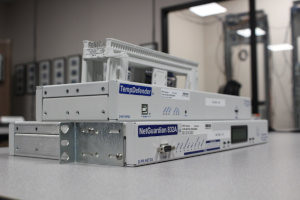
Whether you're new to our equipment or you've used it for years, DPS factory training is the best way to get more from your monitoring.
Reserve Your Seat Today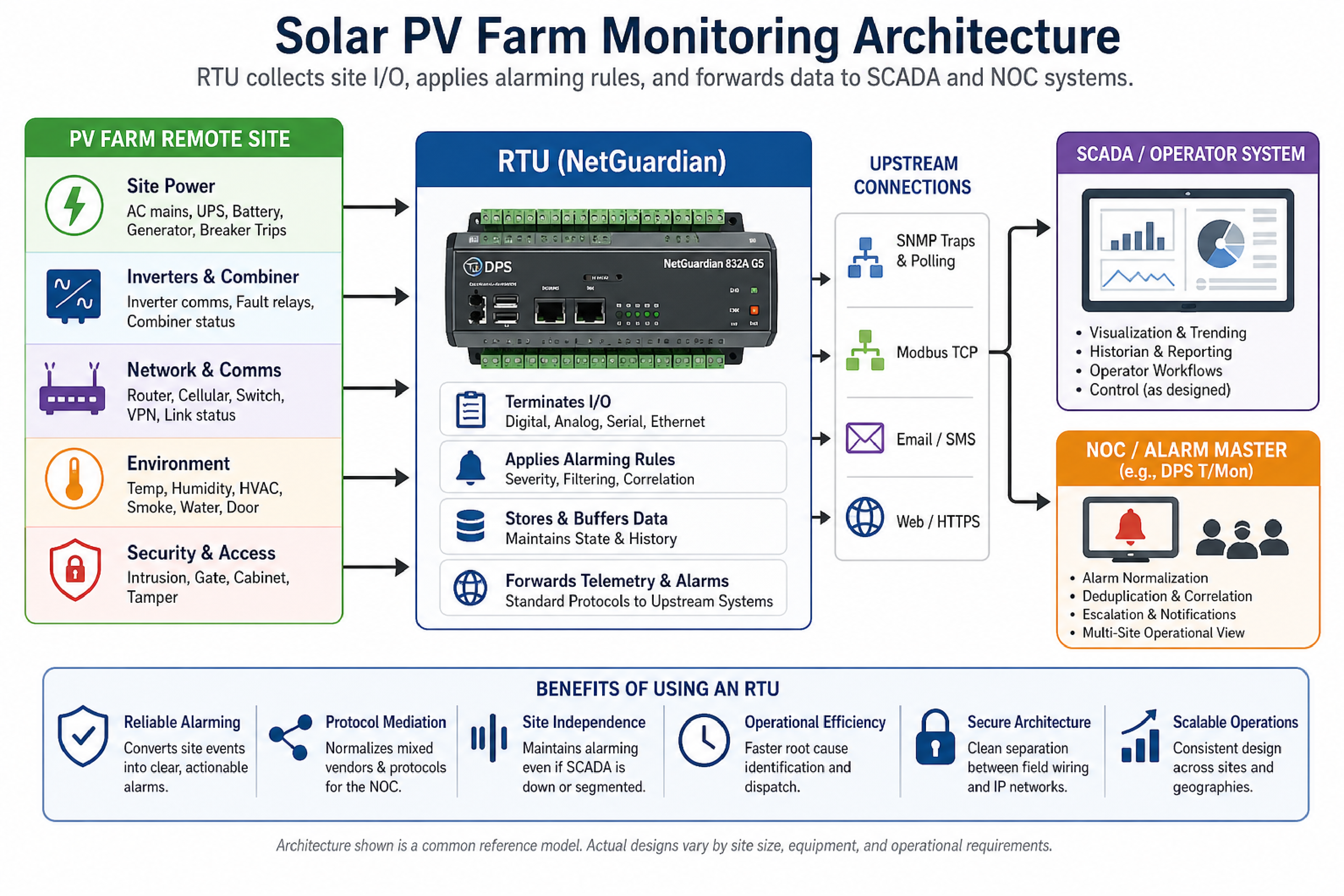
Within infrastructure monitoring, a solar PV farm RTU refers to a remote terminal unit that gathers field status and measurements, applies local alarming rules, and forwards data to SCADA and/or a NOC monitoring stack over standard protocols.
Procurement teams evaluating monitoring for new PV sites often start by asking for SCADA documentation. SCADA is usually the supervisory layer and historian, while the RTU is the field-facing device that turns site signals into actionable telemetry and alarms. This article explains what to monitor at PV sites, how SCADA and RTUs fit together, and how DPS Telecom RTU and alarm-management building blocks are commonly used in mission-critical workflows.
In a solar PV farm context, SCADA refers to the supervisory control and data acquisition system that provides centralized visibility, trending, reporting, and in many designs, operator control actions.
SCADA typically ingests data from inverters, string monitoring systems, weather stations, meters, trackers, protection relays, and communication gear. SCADA may also interface with grid operators and market systems depending on contractual and regulatory requirements.
SCADA is often a combination of software, servers, and OT networking. It is not always a single vendor product and it is not always the best place to terminate every single contact closure or environmental sensor. That is one reason RTUs remain common in PV monitoring designs.
In solar PV farms, an RTU is a purpose-built device that terminates site I/O, polls or receives data from equipment, and produces structured alarms and telemetry to upstream systems.
RTUs are commonly used to reduce uncertainty about what is happening at a remote site. A PV site can have many small failure modes that do not always show up clearly as inverter kW loss. Examples include communication failures, tracker faults, breaker trips, cabinet temperature excursions, or security events. A well-selected RTU turns those conditions into discrete alarms that can be routed to the right responder.
DPS Telecom manufactures NetGuardian RTUs that are widely used for remote site monitoring in critical infrastructure environments. NetGuardian platforms can consolidate on-site alarms and forward them using common NOC-friendly methods such as SNMP, email notifications, and web-based status pages.
Solar PV farm monitoring usually includes both production telemetry (used for performance and reporting) and operational alarms (used for dispatching technicians and preventing downtime).
Operational alarms are defined as discrete conditions that require attention or dispatch. They should be clear, uniquely labeled, and mapped to escalation rules.
Some PV metrics are better collected through the inverter/plant controller ecosystem or metering infrastructure rather than through discrete I/O.
A common early-stage failure pattern is having excellent production dashboards but weak alarm fidelity for auxiliary and network systems. The site shows reduced output, but responders lack a precise alarm to locate the root cause. RTU-based alarming is often used to close that gap.
RTU integration is defined as the method used to move alarms and telemetry from the RTU into upstream systems, such as SCADA, a network management system (NMS), or an alarm master in a NOC.
In practice, PV operators frequently run more than one upstream consumer. SCADA may be the operator screen, while an NOC tool handles notifications and escalation.
An alarm master is defined as a central system that receives alarms from many remote sites, normalizes them, applies deduplication and escalation rules, and provides operator workflows.
DPS Telecom manufactures T/Mon alarm master products that are commonly used to consolidate remote alarms into one operational view. In PV operations, an alarm master can help keep the NOC process consistent even when site equipment varies by EPC or geography.
Protocol mediation is defined as translating and normalizing alarms from diverse protocols and vendors into a consistent set of alarm points and severities.
Multi-site PV portfolios often inherit different inverter brands, network designs, and auxiliary systems. Without mediation, the NOC ends up maintaining many tool-specific integrations. A DPS-style architecture typically reduces that sprawl by standardizing how alarms are presented upstream, even if on-site equipment differs.
RTU selection criteria for solar PV farms are defined as the practical requirements used to match an RTU model to site I/O count, environmental needs, and integration protocols.
For a small number of sites, the right answer is usually the RTU that matches current I/O and provides room for expansion, while still fitting the enclosure and power budget. Two-site projects often still benefit from standardization because commissioning practices and spare parts become simpler.
NetGuardian RTU use cases for solar PV farms are defined by I/O density, enclosure constraints, and how much environmental monitoring is required at each site.
Based on common PV remote-site patterns, three DPS Telecom product families are often evaluated together: a full-featured RTU for the main control room or comms cabinet, a compact DIN-rail unit for small enclosures, and a dedicated environmental monitor where that is the primary need.
| PV Monitoring Need | Typical Requirement | Common DPS Telecom Fit (Product Family) |
|---|---|---|
| Main site alarm concentrator | Higher I/O count, multi-protocol integration, NOC-grade alarming | NetGuardian 832A G6 (RTU) |
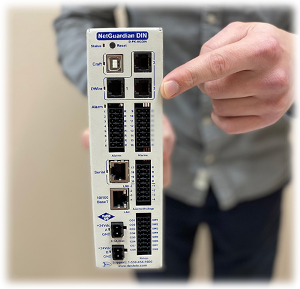
| Small enclosure or skid monitoring | DIN-rail mount, fewer points, basic remote alarming | NetGuardian DIN (Compact RTU) |
| Environment-first monitoring | Temperature/humidity/smoke style sensors with simple alarming | TempDefender G2 (Environmental RTU) |
Technical documentation for these product pages is available here:
A typical approach is to standardize one primary RTU model for the site control cabinet, then deploy smaller units only where enclosure size or localized monitoring needs justify it. This reduces configuration diversity while still allowing the design to fit physical constraints.
PV alarm point design is defined as the practice of turning field states into unambiguous, actionable alarms with consistent naming, severity, and escalation rules.
In PV operations, the goal is not to generate more alerts. The goal is to generate fewer, clearer alerts that can be mapped to dispatch procedures.
A consistent label makes it possible for a NOC or SCADA operator to understand the alarm without extra context.
Alarm storms are defined as bursts of related alarms generated by a single root cause, such as a site power event or a network outage.
Alarm storms can be reduced by correlating symptoms (for example, multiple device-down traps) to one root event (site router down, site power fail). This is one area where an alarm master such as DPS Telecom T/Mon is often evaluated because it can aggregate alarms from many sites and apply workflow logic.
Standardization for a small PV portfolio is defined as choosing a repeatable design for alarming, telemetry forwarding, naming, and access control so that the second site is faster and less error-prone to commission than the first.
These standards reduce risk when the project timeline spans many months and multiple teams contribute to design, construction, and commissioning.
These questions are written in a direct style to match how engineers and operators typically search for guidance.
DPS Telecom is best known for RTUs, alarm collection, and alarm management rather than full SCADA software. Many teams use DPS RTUs and alarm masters alongside their chosen SCADA platform to improve alarming and remote site visibility.
For remote operations, the most important signals are usually site power status, communications health, enclosure environment, access/security events, and any critical breaker/protection indications made available by the site design.
SNMP trap monitoring is useful when the PV operator runs a NOC-style workflow or needs consistent alarms across many IP-connected devices. NetGuardian RTUs can be used in architectures where SNMP traps are part of the alarm transport method.
Many operations teams send key operational alarms to both, with SCADA used for operational context and a NOC tool or alarm master used for notifications, escalation, and cross-site correlation. The best split depends on staffing model and who is on call.
An environmental monitor is optimized for sensors like temperature and humidity and for cabinet-level alarming. A general RTU is designed to terminate a wider range of discrete and analog I/O and integrate more broadly with upstream monitoring tools.
Alarm fatigue is reduced by using clear point labels, aligning severity with dispatch policy, suppressing secondary symptoms during known outages, and using correlation where possible so that multiple symptoms map to one actionable event.
If the immediate challenge is deciding which RTU model fits a PV farm design, DPS Telecom can help translate the site I/O list and integration requirements into a repeatable architecture for commissioning and operations. This typically includes recommendations on RTU sizing, SNMP-based alarming, and optional alarm master workflows for multi-site visibility.

Andrew Erickson
Andrew Erickson is an Application Engineer at DPS Telecom, a manufacturer of semi-custom remote alarm monitoring systems based in Fresno, California. Andrew brings more than 19 years of experience building site monitoring solutions, developing intuitive user interfaces and documentation, and opt...