Check out our White Paper Series!
A complete library of helpful advice and survival guides for every aspect of system monitoring and control.
1-800-693-0351
Have a specific question? Ask our team of expert engineers and get a specific answer!
Sign up for the next DPS Factory Training!
Whether you're new to our equipment or you've used it for years, DPS factory training is the best way to get more from your monitoring.
Reserve Your Seat TodayQwest's Dallas Network Operations Center (NOC) needed a way to avoid being locked into a single vendor while continuing to use legacy Pulsecom Datalok 10 Series remotes alongside newer network elements. Qwest deployed four DPS Telecom IAMs running T/MonXM software to poll alarm data and centralize visibility for operations staff.
| Industry | Telecommunications |
|---|---|
| Company Type | Telecom network operations center (NOC) |
| Geography / Coverage | Dallas, Texas (Dallas NOC) |
| Primary Challenge | Avoid vendor lock-in while polling and managing alarms from legacy Pulsecom Datalok remotes and newer network elements |
| Solution Deployed | Four IAMs running T/MonXM software to poll fault alarm data and display alarms on operator screens |
| Key Result | Unified, multi-vendor alarm visibility and control use-cases with ongoing DPS Telecom support |
| Implementation Timeframe | Qwest began using DPS equipment about 5 years prior to the interview in this story |
| Products Used | IAM-5 running T/MonXM; Pulsecom Datalok 10A remotes; KDA 864 network elements |
Qwest's Dallas NOC collected fault alarm data from a large population of legacy Pulsecom Datalok 10A remotes as well as DPS Telecom KDA 864 network elements. Bob Mecchi supervised the center, and the NOC displayed alarms using T/Access and T/Remote screens in two locations.
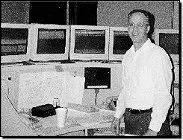
In an interview, Mecchi described how the system supported both monitoring and operational control tasks. As he explained: "We monitor the Automatic Gain Control on the microwave radios. We monitor the station batteries, station temperatures and we use it for controlling the remote generators at the locations, to remotely start and stop them, if need be. We use them for turning computers on and off and for other applications."
The Dallas NOC needed to modernize its alarm management approach without losing the value of existing remote alarm equipment already deployed across the network. A key requirement was avoiding dependence on a single manufacturer for remote alarm units, while still integrating both legacy Pulsecom remotes and newer network elements into one alarm display and workflow.
DPS Telecom has supported Pulsecom Datalok 10 Series remotes since the early 1990s, enabling many clients to incorporate legacy Pulsecom remotes into advanced monitoring solutions based on the IAM-5. DPS Telecom has also continued to support clients with legacy gear, creating legacy support solutions for abandoned remotes by Badger, Dantel, Larse, and NEC.
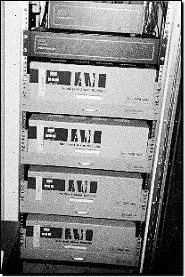
Qwest's Dallas NOC employed four IAMs running T/MonXM software to poll fault alarm data from the network. This design allowed the NOC to collect alarms from multiple device types and present them in a consistent operator interface using T/Access and T/Remote screens.
For organizations managing mixed fleets of legacy and newer remote alarm hardware, the approach in this story highlights a core DPS Telecom principle: bring alarms to a central point where they can be normalized, displayed, and acted on, regardless of the remote vendor or protocol. When a NOC can poll legacy remotes and newer network elements with the same alarm manager, the team can preserve existing infrastructure while improving visibility and operational consistency.
Mecchi noted that Qwest began using DPS equipment about 5 years prior to the interview. His original vendor selection criteria emphasized versatility and avoiding lock-in: "the capability of being versatile, to not be just locked into one manufacturer's remote alarm unit, and DPS gave me that avenue."
After selecting DPS, he also identified additional capabilities that supported their needs: "After I purchased was when I realized that the DPMs were another plus which suited our needs here and, in addition, afterwards found out about the TBOS as well that could be used with the KDAs."
In practical terms, this reflects a common deployment pattern in telecom monitoring: start by consolidating fault and status alarms, then expand into additional points and integrations as operators identify higher-value use-cases. DPS Telecom systems are frequently used to bring in discrete alarm points, analog telemetry (such as battery and temperature), and protocol-driven status from network elements, then route those events to the screens and tools operators already rely on.
By using four IAMs running T/MonXM to poll both Pulsecom Datalok remotes and DPS Telecom KDA network elements, the Dallas NOC achieved multi-vendor alarm collection under one manager and avoided being limited to a single remote alarm vendor.
Mecchi also emphasized the long-term value of DPS Telecom support as part of the overall solution: "the biggest selling point for DPS is the customer satisfaction. Regardless of the trouble for DPS or the customer, DPS is willing to work to resolve the problem and expend the time needed to do so. DPS is not one of those companies that's trying to throw fault one way or the other. DPS is just basically there to resolve whatever the issue may be to get everything working correctly."
IAM-5 running T/MonXM: Central alarm polling and management for fault data (T/Mon family). For current DPS alarm management solutions, see T/Mon alarm management.
Pulsecom Datalok 10A / 10 Series remotes: Remote alarm units polled by the IAMs.
KDA 864 network elements: DPS Telecom elements contributing fault alarm data. For modern RTU and SNMP-based monitoring approaches, see DPS Telecom RTU products and the NetGuardian product family.
If you are building a similar NOC architecture today, DPS Telecom typically recommends a current-generation T/Mon system such as T/Mon LNX for centralized alarm management and presentation, paired with RTUs and protocol integrations appropriate to your remote equipment base.
Polling is when a master system regularly queries remote devices to retrieve status and fault information. In this story, IAMs running T/MonXM polled Pulsecom Datalok remotes to gather fault alarm data for display at the NOC.
When alarms from different remote devices can be collected and displayed by one manager, the NOC is not forced to standardize on only one remote alarm unit vendor. The manager becomes the stable layer, while remote devices can evolve over time.
According to Qwest, the system was used to monitor Automatic Gain Control on microwave radios, station batteries, and station temperatures, and it supported control tasks like remotely starting and stopping generators and turning computers on and off.
Telecom networks often include long-lived remote devices and interfaces. DPS Telecom maintains solutions that help incorporate older remotes (including legacy Pulsecom and other abandoned remotes) into newer monitoring architectures so operators can modernize without starting from zero.
To learn how DPS Telecom can help you centralize alarms across legacy and modern network elements, get a free consultation.
Do you have questions about the IAM or T/MonXM? Give us a call at 1-800-693-0351 and talk to one of our specialists. They'll help answer any questions you may have.