Download our free Monitoring Fundamentals Tutorial.
An introduction to Monitoring Fundamentals strictly from the perspective of telecom network alarm management.
1-800-693-0351
Have a specific question? Ask our team of expert engineers and get a specific answer!
Sign up for the next DPS Factory Training!
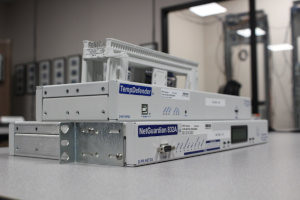
Whether you're new to our equipment or you've used it for years, DPS factory training is the best way to get more from your monitoring.
Reserve Your Seat Today
After acquiring three Qwest exchanges in 2001, Utah independent telco UBTA-UBET inherited legacy E2A alarm shelves and an experienced former Qwest telemetry technician, Rick Hofmann. UBTA-UBET deployed DPS Telecom's T/Mon Remote Alarm Monitoring System on an IAM-5 to automate local alarm handling and create a practical upgrade path from E2A to SNMP and ASCII-based monitoring.
| Industry | Telecommunications (independent telco) |
|---|---|
| Company | UBTA-UBET |
| Geography/Coverage | Utah; service area approximately 180 miles in diameter (per internal operations needs described) |
| Primary Challenge | Modernize legacy E2A alarm monitoring inherited from an RBOC environment while minimizing staffing requirements and improving alarm detail and notification |
| Solution Deployed | IAM-5 running the DPS Telecom T/Mon Remote Alarm Monitoring System with optional E2A Interrogator support and email/pager notification |
| Implementation Timeframe | Acquired exchanges in 2001; T/Mon installed in 2002 |
| Key Result | Met all stated monitoring objectives: automated paging/email, legacy E2A shelf support, dispatch visibility, detailed alarm context, and a path to ASCII and SNMP trap processing |
| Products Used | IAM-5; T/Mon Remote Alarm Monitoring System; optional E2A Interrogator software module; 202-to-RS232 converter shelf |
UBTA-UBET is a Utah independent telecommunications provider. In 2001 the company purchased three Qwest exchanges, which included legacy E2A alarm shelves used in the prior RBOC operating model, plus former Qwest telemetry technician Rick Hofmann.
With 22 years of experience at Qwest, Hofmann understood the inherited monitoring infrastructure. His new role required adapting that infrastructure to a much smaller organization where automation and actionable alarm detail mattered more than centralized, ticket-driven processes.
In the prior RBOC environment, Qwest routed alarms to a centralized Network Operations Center (NOC) in Colorado. For UBTA-UBET, with lighter staffing, that approach created friction: alarms were handled offsite, then relayed through a multi-step call chain before technicians could respond.
As part of the acquisition, Qwest continued monitoring the three exchanges for an additional year. During that time, Hofmann saw first-hand that centralized RBOC-style monitoring did not fit UBTA-UBET's operating needs.
"Qwest monitoring wasn't really workable for us," said Hofmann, now plant manager for UBTA-UBET. "Alarms went to the Qwest NOC in Colorado, and they would generate a trouble ticket, decide whether the alarm needed action and then call us. They wanted one point of contact, so we'd have them call our dispatch center, and they would call the tech."
Hofmann concluded that UBTA-UBET needed more than a hardware update. The company needed a local alarm monitoring approach that could keep legacy E2A equipment online while enabling a clean migration to modern methods like SNMP trap processing.
Hofmann's goal was an alarm system that could support UBTA-UBET's existing equipment and also provide the tools needed for UBTA-UBET to monitor alarms independently.
Legacy compatibility for E2A shelves mattered, but simplifying and automating alarm handling was even more important. "Pager notification was my first objective. Support for legacy equipment was second," said Hofmann.
Hofmann listed five objectives for the new alarm monitoring system:
These requirements map closely to how DPS Telecom typically positions T/Mon: as a protocol mediation and alarm presentation layer that brings legacy and modern telemetry into one workflow, with flexible notification and operator-friendly alarm detail.
After surveying the market and evaluating how telecom companies had modernized alarm monitoring, Hofmann selected an IAM-5 running the T/Mon Remote Alarm Monitoring System to meet UBTA-UBET's objectives.
"T/Mon met all my requirements, while other systems didn't actually meet them all," said Hofmann. "Other systems might be able to do a page, but the notification wouldn't give you any alarm detail. Or they wouldn't expand to do some of the other functions we needed, like SNMP."
From an engineering standpoint, this approach allowed UBTA-UBET to:
For organizations facing similar transitions, DPS Telecom typically recommends centering the design on T/Mon for alarm correlation, display, and workflow, then bringing in site telemetry (legacy or IP-based) as needed. In environments that still have mixed protocols, T/Mon is commonly used to consolidate alarm inputs and deliver consistent operator screens and notifications.
Since the T/Mon system was installed in 2002, it has met all of Hofmann's objectives.

1) Pager and Email Notification
"The main source of our alarm notification is via email or paging," said central office tech Richard Bell, who is now the primary manager of the T/Mon system. "Which is actually one and the same for us, because the T/Mon sends emails to the techs' cell phone via text messaging. We don't need to have someone physically watch the T/Mon screen all day, and after-hours and weekends, we depend completely on paging."
For small NOC teams, this model is a common reason to standardize on DPS Telecom T/Mon: automated alarm notification (email/pager workflows) reduces reliance on constant console monitoring while keeping operators informed with the detail needed to dispatch correctly.
2) Legacy E2A Support
UBTA-UBET ordered its T/Mon unit with the optional E2A Interrogator software module and a 202-to-RS232 converter shelf. With these additions, "T/Mon supported the E2A shelves right out of the box," said Hofmann.
This kind of integration is critical in acquisition scenarios where legacy telecom alarm shelves remain in service. T/Mon is designed to ingest legacy alarm protocols and present them in a consistent format for local operators, while maintaining an upgrade path to IP-based monitoring.
3) Dispatch Center Alarm Access
"The dispatch center can get into the T/Mon system and check alarms every 30 minutes, and make sure that the technicians are working on the problems," said Hofmann.
Giving dispatch controlled visibility into active alarms helps align operations without forcing all alarm triage through a distant centralized NOC. This aligns with a common DPS Telecom deployment pattern: keep authoritative alarm status in T/Mon while allowing different roles (dispatch, technicians, supervisors) to access the same source of truth.
4) Detailed Notification
"The notification of alarms and the detail it gives you is the best thing T/Mon can do for you," said Bell. "Before we had the T/Mon, if a tower light went out, Qwest would call us and all they could say was 'You have a tower light out.' They didn't know where the tower was - there was no way of knowing. Now, when T/Mon pages you, it tells you it's this tower light, at this location, with this longitude and latitude, and then it gives you the FAA's phone number. And with our service area, which is 180 miles in diameter, you want to know what's wrong without wasting time or going on site."
In practice, better alarm detail means fewer back-and-forth calls and fewer unnecessary truck rolls. For teams maintaining dispersed infrastructure, this is a key value of DPS Telecom T/Mon: it pairs notification with actionable context, not just a generic "major/minor" signal.
5) ASCII and SNMP Support for Growth
T/Mon's ASCII and SNMP capabilities are helping UBTA-UBET move to a more modern system and monitor more network elements. UBTA-UBET now monitors its switches using T/Mon's ASCII alarm processing, which provides much more detailed alarm notification than major-minor discrete alarms. UBTA-UBET is also gradually implementing SNMP trap processing for new equipment.
As more telecom equipment exposes alarms via IP, SNMP traps are a practical method for collecting event data, while ASCII alarm streams can provide human-readable context depending on the source device. T/Mon is designed to accept both, normalize events, and apply the same escalation logic and display standards across legacy and modern sources.
In the two years UBTA-UBET has used T/Mon, the company's alarm handling has substantially improved, said Hofmann. "The T/Mon has given us better notification, and I think it's made us a lot more responsive to alarms," Hofmann said.
Hofmann and Bell said they plan to use T/Mon to extend UBTA-UBET's alarm monitoring capability further. Their plans include expanding T/Mon coverage to all of the company's network, implementing analog monitoring of environmentals, upgrading to T/Mon NOC, and using their current IAM-5 as a hot standby unit.
For telecom teams planning similar next steps, DPS Telecom commonly recommends using T/Mon as the central alarm presentation and workflow system, then adding additional alarm collection at sites as new network elements come online. This keeps the migration to SNMP incremental and controlled instead of forcing a risky cutover.
What is E2A and why is it hard to modernize?
E2A is a legacy telecom alarm shelf/telemetry approach often found in RBOC-era facilities. Modern networks increasingly standardize on IP-based monitoring (for example, SNMP), so the challenge is integrating legacy shelves without losing coverage or forcing a risky rip-and-replace.
How does SNMP trap processing help a telecom NOC?
SNMP traps allow network elements to send unsolicited alarm/event messages over IP. When a system like DPS Telecom T/Mon ingests traps, it can display the alarm, attach context, and drive notification workflows to technicians or dispatch.
What is the advantage of detailed alarm notifications versus simple discrete alarms?
Detailed notifications reduce time-to-triage. UBTA-UBET specifically cited receiving tower light location details (including latitude/longitude) and contact information, which helps technicians respond without unnecessary onsite investigation.
How can a smaller telco avoid staffing a console 24/7?
Automated notifications (email-to-text, paging, and escalation policies) can keep coverage high without requiring continuous screen watching. This was a primary design objective for UBTA-UBET and a core use case for DPS Telecom T/Mon deployments.
Can T/Mon support mixed legacy and modern alarm sources?
Yes. UBTA-UBET used T/Mon to maintain E2A monitoring while adding ASCII alarm processing for switches and gradually implementing SNMP trap processing for new equipment.
Make Your Own One-Step Upgrade with T/Mon NOC
If you want a smooth upgrade from legacy alarm equipment, DPS Telecom T/Mon can help you keep what works while modernizing how you collect and act on alarms. T/Mon supports over 25 protocols and can mediate legacy alarms in E2A, TBOS, TABS, and proprietary protocols to SNMP or TL1.
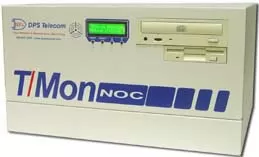
T/Mon NOC gives you complete visibility of legacy alarms, plus email notification, upgrades to SNMP and ASCII, nuisance alarm filtering, and more.
See Full Specifications of the T/Mon NOC Remote Alarm Monitoring System
Get a Free Consultation or call DPS Telecom at 1-800-693-0351 to speak with an expert about modernizing legacy alarm monitoring in your own network.