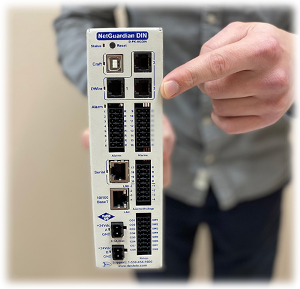
Download our free Monitoring Fundamentals Tutorial.
An introduction to Monitoring Fundamentals strictly from the perspective of telecom network alarm management.
1-800-693-0351
Have a specific question? Ask our team of expert engineers and get a specific answer!
Sign up for the next DPS Factory Training!
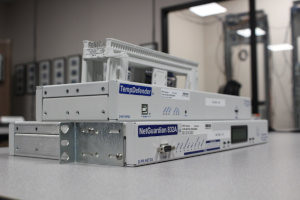
Whether you're new to our equipment or you've used it for years, DPS factory training is the best way to get more from your monitoring.
Reserve Your Seat TodayKMC Telecom, a fast-growing provider of voice, data, and Internet services, moved from outsourced monitoring to an in-house network operations center (NOC) in Huntsville, Alabama. By deploying DPS Telecom NetGuardian RTUs across its nationwide fiber network, KMC reduced operating costs by about $2 million per year while gaining real-time visibility that proved valuable during November's tornado strike.
| Industry | Telecommunications (CLEC) |
|---|---|
| Company | KMC Telecom |
| Network Footprint | Approximately 30,000 miles of fiber across 35 states |
| Primary Challenge | Reduce the cost of outsourced network monitoring while improving real-time alarm visibility and response |
| Solution Deployed | In-house network operations center (Huntsville, AL) with distributed remote alarm collection |
| Products Used | NetGuardian RTU family |
| Key Result | About $2 million per year in savings; improved real-time monitoring and outage response |
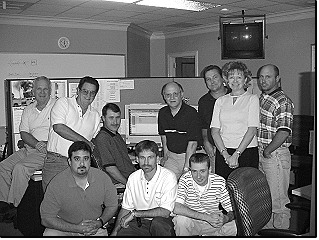
In 2001, KMC Telecom evaluated a question many growing carriers eventually face: why continue paying an outside provider for monitoring when an internal team can scale to meet the need? KMC had relied on outsourced monitoring since building its facilities network in the mid-1990s, but growth created a clear opportunity to bring monitoring in house and reduce ongoing costs.
To support this shift, KMC established a highly successful NOC in Huntsville, Alabama and standardized alarm collection across remote sites so operators could see network and facility conditions as events happened.
KMC's fiber network spanned roughly 30,000 miles across 35 states. As the company grew from start-up to a major-league CLEC, the scale of monitoring and the recurring cost of outsourcing became a larger part of overall operations expenses.
At the same time, KMC needed real-time alarm visibility for conditions that can affect service and network availability, including:
For KMC, the goal was not only to reduce spend, but also to put alarm information directly in the hands of the Huntsville team to speed response when outages occur.
KMC created an in-house NOC and used DPS Telecom NetGuardian units as the distributed alarm collection layer across the network. KMC deployed NetGuardians in 48 locations across the United States.
NetGuardian RTUs are designed for telecom remote monitoring: they collect discrete alarm points and other site conditions from power systems, environmental sensors, security contacts, and network equipment, then report those events to central monitoring systems. This architecture supports a scalable NOC model because each remote site can be standardized for alarm collection while the NOC maintains centralized visibility.
Harold Moses, Director of Operations for KMC in Huntsville, described the business driver behind the move:
"We'd outsourced our monitoring since we deployed our facilities network. For most start-ups, it's not economical to do these things for yourself. But as the network grew, it became more and more practical for us to take monitoring in house. We're looking at cost savings and how to integrate costs."
In addition to supporting the in-house NOC model, the NetGuardian deployment helped KMC standardize access to alarms across different equipment vendors, reducing complexity for operators who need consistent workflows during events.
"DPS Telecom gives us a reliable way of accessing a variety of equipment, regardless of the brand or provider. We now have a common interface for our existing system."
KMC's approach combined centralized operations in Huntsville with remote data collection at sites across the country. With NetGuardians deployed to 48 locations, the NOC could monitor alarms for fiber integrity and remote facility conditions in real time, rather than depending on an external provider to relay events.
This is a common pattern in carrier NOCs: putting intelligent alarm collection at the edge (remote huts, shelters, POPs, and other facilities) while keeping decision-making and response coordination centralized. DPS Telecom NetGuardian RTUs are built specifically for that distributed monitoring model.
Moses said the move to an in-house NOC cut operational expenses significantly, resulting in about $2 million per year in savings, with DPS Telecom NetGuardian equipment contributing to the overall project savings.
Operationally, the Huntsville team gained real-time monitoring capability and improved response to network outages by viewing alarm events as they occurred. This real-time visibility also proved itself during November's tornado strike, when rapid awareness of alarms can support faster, better-coordinated responses.
DPS Telecom NetGuardian RTU family - Remote alarm monitoring and collection for network integrity and facility alarms (power, environment, security)
For telecom teams building or expanding an in-house NOC, NetGuardian is a practical foundation for collecting alarms from remote sites and delivering the real-time visibility operators need to reduce downtime and operating cost.
As a network footprint and customer base grow, recurring outsourced monitoring costs can become significant. An in-house NOC can reduce those costs while improving direct control over alarm visibility and response workflows.
In this case, KMC used NetGuardian units to monitor fiber/network integrity as well as environmental, power, and security alarms at remote sites. NetGuardian RTUs are commonly used to collect discrete alarm contacts and other site condition signals and report them to centralized monitoring.
Deploying a standardized RTU at each site simplifies the job of the NOC. Instead of managing unique alarm interfaces at every location, operators can receive consistent alarm reporting and escalation from across the network.
Yes. As KMC noted, DPS Telecom provided a reliable way to access a variety of equipment regardless of brand or provider, enabling a common interface for the existing system.
See more about KMC's deployment of NetGuardians: NetGuardian interface and integration.
If you are replacing outsourced monitoring or scaling an in-house NOC, DPS Telecom can help you design a practical alarm collection and visibility strategy using NetGuardian RTUs. Get a Free Consultation or call 1-800-693-0351 to speak with an expert about your project.