Check out our White Paper Series!
A complete library of helpful advice and survival guides for every aspect of system monitoring and control.
1-800-693-0351
Have a specific question? Ask our team of expert engineers and get a specific answer!
Sign up for the next DPS Factory Training!
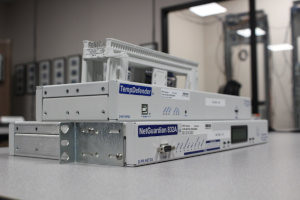
Whether you're new to our equipment or you've used it for years, DPS factory training is the best way to get more from your monitoring.
Reserve Your Seat Today
Choosing the right remote monitoring system for your cell tower network is one of the highest-leverage decisions a tower operator or telecom engineer will make. The right system catches failures before they become outages. The wrong one generates noise, leaves visibility gaps, and still sends a technician out at 2 a.m.
At DPS Telecom, we've spent nearly 40 years building and deploying monitoring systems across telecommunications networks of every scale, from a handful of rural sites to thousands of towers managed from a single NOC. With over 172,000 devices deployed across 1,500+ companies, we've seen what separates a system that actually works from one that looks good in a product sheet.
The short answer: the best cell tower monitoring system covers your full failure chain (power, environment, equipment, and communications), speaks every protocol in your network, filters alarm noise intelligently, and can grow with your infrastructure without a full replacement. This guide walks through each of those criteria.
Before evaluating features, it helps to understand what's actually at stake. Industry estimates put the cost of a cell tower outage at $500,000 per hour or more, and power failures alone account for 43-45% of all significant site outages according to the Uptime Institute's Annual Outage Analysis. Nearly one-third of providers have reported losing more than $1 million from a single outage event.
The financial exposure from SLA violations compounds this. The telecom industry standard is 99.999% uptime, known as "five nines," which permits only 5.26 minutes of downtime per year. Here's what each tier actually means:
| SLA Level | Annual Downtime Allowed | Monthly Downtime |
|---|---|---|
| 99.0% | 87.6 hours | 7.31 hours |
| 99.9% | 8.76 hours | 43.8 minutes |
| 99.99% | 52.6 minutes | 4.38 minutes |
| 99.999% | 5.26 minutes | 26.3 seconds |
Each step up in that table requires a monitoring system that can detect and escalate failures faster. There is no realistic path to four or five nines without automated, continuous monitoring at every site.
Regulatory pressure reinforces this. Under FCC Part 4 (47 CFR §4.9), wireless providers must report significant outages within 120 minutes of discovery, which is only possible with automated detection and alerting. The FCC's backup power order also established minimum reserves of 8 hours for cell sites, and monitoring is the only way to verify those reserves are actually available when needed.
A cell tower site is not a single-vendor environment. It contains routers, switches, power rectifiers, generators, HVAC controllers, legacy transport gear, and environmental sensors, each potentially communicating differently. A monitoring system that can't talk to all of them will leave gaps you won't discover until something fails.
The core protocols to require support for:
Beyond these, many networks contain equipment that uses proprietary formats like E2A, TBOS, TABS, DCP, and various manufacturer-specific protocols. A system that requires you to replace working equipment just to achieve compatibility is going to be expensive and disruptive.
What you're looking for is protocol mediation: the ability to receive alarms in one protocol, translate them, and forward them in another. This is what allows legacy and modern equipment to coexist in the same management view.
As we note in our book 100% Uptime, many manufacturers develop proprietary protocols specifically to lock you into their ecosystem. Fractured systems are a reliable way to build confusion and drive up costs. Our T/Mon alarm master station currently supports 35 protocols, including proprietary and older formats, and we continue adding protocols as clients need them. One NOC Manager at a fiber ISP described the practical impact: "DPS Telecom gives us a reliable way of accessing a variety of equipment, regardless of the brand or provider."
A single fault at a cell site can generate dozens or hundreds of related alarms. Research on large telecom networks has shown that effective alarm correlation can reduce alerts presented to operators by over 90%, from millions of raw events down to actionable notifications. Without that filtering, NOC operators drown in noise and miss the alarms that actually matter.
A capable alarm management system needs several layers of intelligence:
The goal, as we put it in 100% Uptime, is a monitoring system that fades into the background. When it's working correctly, serious alarms are clear and obvious, and your team isn't wasting time sorting through noise to find them.
Power failures are the leading cause of cell site outages. During California's 2019 PG&E power shutoffs, 57% of towers in Marin County went dark when backup power failed. The outages were not unpredictable; operators simply had no visibility into the backup power chain until it was already too late.
A comprehensive power monitoring deployment tracks every link:
Environmental monitoring matters just as much. HVAC failures cause longer outages than simple power interruptions because equipment can't restart until temperatures normalize. ASHRAE TC 9.9 guidelines recommend operating ICT equipment between 18-27°C (64.4-80.6°F). Humidity outside the 30-60% relative humidity range causes its own problems: corrosion at the high end, electrostatic discharge risk at the low end. Water intrusion undetected for a few hours can destroy an equipment room.
Fred Marvin at the Steuben County Office of Emergency Services described what they monitor across nine tower sites and a 911 center: "We are getting analog inputs for generator voltage, and microwave signal fade. Discrete alarms might be door entry, or temperature high/low, things like that."
That combination of analog values, discrete contact closures, and network signal data is what comprehensive site visibility looks like in practice.
For tower deployments specifically, our NetGuardian RTUs handle all of these input types. The CTMS (Complete Tower Monitoring System) packages a NetGuardian inside a NEMA stainless steel enclosure with AC/DC converter, external temperature sensor, and battery-backed power, purpose-built for the harsh conditions at remote tower sites.
A monitoring system built for 20 sites will create problems at 200. A system designed for 2,000 sites is overkill and overly complex for a regional carrier just getting started. The right answer is a platform that fits your current scale and has a clear growth path, not one that requires a full replacement when your network expands.
Here's how our product line maps to different deployment scales:
| Platform | Capacity | Best For |
|---|---|---|
| T/Mon MINI | Up to 64 remotes | Entry-level / smaller networks |
| T/Mon SLIM (1RU) | 64 devices, 10,000 alarm points | Regional carriers, small networks |
| T/Mon LNX | 9,999 devices, 999,999 alarm points | Enterprise carriers, large utilities |
| NetGuardian 832A G5 | 32-128 discrete, 8 analog, 8 control relays | High-capacity sites |
| NetGuardian 420 | 20 discrete, 6 analog, terminal server | Mid-capacity sites |
| NetGuardian 216 G3 | 16 discrete, 2-8 analog | Small or compact sites |
The T/Mon SLIM has a direct upgrade path to the full T/Mon LNX, so operators don't lose their investment as they grow. For operators without a dedicated 24/7 NOC, the SLIM's web-based alarm management, geographic map display, and automated email/phone notifications are fully functional without requiring a staffed operations center.
Northbound integration is equally important for larger deployments. Your monitoring master needs to forward processed, correlated alarms to your existing management platforms, whether that's SolarWinds, ServiceNow, Nagios, or a carrier-grade OSS, via SNMP traps, TL1 autonomous messages, syslog, or REST APIs. Our T/Mon remote monitoring and management platform supports all of these integration paths.
Seeing the problem is only useful if you can act on it without dispatching a technician.
Industry estimates put the cost of a single emergency truck roll at $500-1,000+ when accounting for drive time, overtime, and follow-up visits. RTUs with control relay outputs allow remote power cycling of equipment, generator start/stop commands, door strike control, and HVAC mode changes. Terminal server ports provide reach-through access to CLI-managed equipment at the site, eliminating separate out-of-band management solutions.
RTUs with dual transport options, Ethernet primary with cellular failover, ensure alarm delivery even when the primary network path is itself the thing that failed.
Billy Young, a Network Engineer at Consolidated Communications, put it plainly: "I've been dealing with them for years. They're reliable. We have about 160 deployed at this time, some have been deployed since '99, and I would say we might have a 1% failure rate."
Beyond feature checklists, a few questions separate vendors worth working with from those that will create problems three years from now:
How do you handle legacy equipment? If the answer is "you'll need to replace it," that's a significant cost driver. The better answer is a monitoring platform with broad protocol support that can bring legacy gear under the same management umbrella.
What happens when we need a protocol you don't support? T/Mon currently supports 35 protocols, and we continue adding them as clients bring new requirements. A vendor willing to develop protocol support on request is a different kind of relationship than one that hands you a static list and says take it or leave it.
What does your support model actually look like? Many vendors treat the sale as the endpoint of the relationship. At DPS Telecom, technical support calls go directly to the engineers who designed the equipment, not a tiered call center. We also offer a 30-day equipment loaner program for hands-on evaluation, a 30-day money-back guarantee, and lifetime technical support at no per-incident charge.
Andrew Erickson, DPS Telecom's Director of Marketing and Application Engineering, has been direct about this: "For many vendors, your purchase is more of a 'thank you and goodbye' than the start of a long-term relationship."
How long does your hardware actually last? Monitoring equipment has a 15-20+ year lifecycle. You're not just buying a product; you're choosing a platform you'll be maintaining and expanding for a decade or more. A vendor that will still be around, still supporting the equipment, and still developing the platform matters a great deal at that timescale.
5G is changing the scale and complexity of what needs to be monitored. 5G requires three to five times more tower sites than 4G due to higher-frequency bands and limited signal reach. The United States already has more than 166,000 small cells in operation, growing at roughly 6% year over year. Many of these sites are on lamp posts, building facades, and utility poles, locations traditional tower monitoring architectures never anticipated.
5G also intensifies power monitoring needs. 5G base stations consume two to three times the energy of previous generations. The RAN alone accounts for 75-80% of total network energy consumption, and energy costs represent 15-20% of operator OPEX on average according to GSMA Intelligence, higher still in dense 5G deployments. That makes power chain monitoring a direct cost management tool, not just an availability concern.
Cybersecurity is also a growing first-order concern for tower monitoring systems. As networks become more interconnected, the monitoring infrastructure itself requires encrypted communications (SNMPv3, TLS), RADIUS authentication, and network segmentation. This is especially relevant for tower operators supporting utility SCADA communications, where NERC CIP violations can result in fines up to $1 million per violation per day.
The research on what makes monitoring programs succeed consistently points to the same five criteria: protocol diversity, intelligent alarm management, comprehensive power and environmental coverage, scalable architecture, and long-term vendor commitment.
The economics are also fairly clear. At DPS Telecom, NetGuardian RTUs start at approximately $700 per site. Against the backdrop of $500,000-per-hour outage costs and SLA penalties measured in service credits, that's one of the higher-ROI investments available in network operations.
Vendor longevity matters as much as feature lists. Monitoring equipment stays in service for 15-20+ years. A vendor who answers the phone, develops the protocols you need, and is still shipping updates a decade after your initial purchase is worth more than a platform with impressive specs and uncertain staying power.
If you're evaluating a cell tower monitoring deployment and want to talk through what makes sense for your specific network, we offer a 30-day loaner program so you can evaluate the equipment hands-on before committing. Contact the DPS Telecom team to get started.

Andrew Erickson
Andrew Erickson is an Application Engineer at DPS Telecom, a manufacturer of semi-custom remote alarm monitoring systems based in Fresno, California. Andrew brings more than 19 years of experience building site monitoring solutions, developing intuitive user interfaces and documentation, and opt...