Check out our White Paper Series!
A complete library of helpful advice and survival guides for every aspect of system monitoring and control.
1-800-693-0351
Have a specific question? Ask our team of expert engineers and get a specific answer!
Sign up for the next DPS Factory Training!
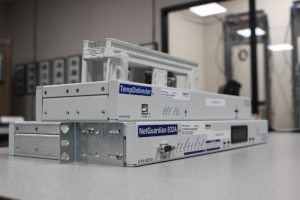
Whether you're new to our equipment or you've used it for years, DPS factory training is the best way to get more from your monitoring.
Reserve Your Seat Today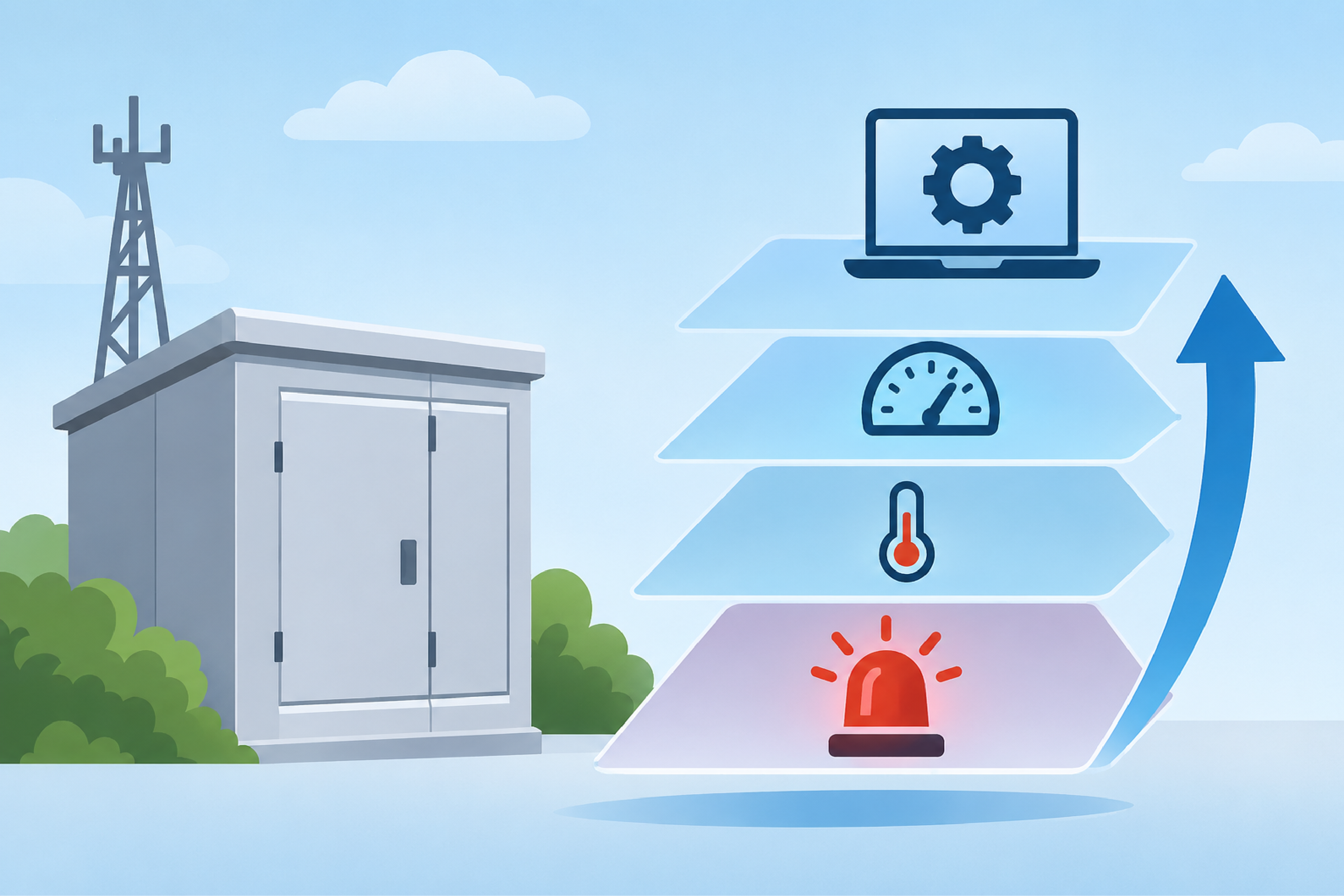
A layered monitoring approach is a way of building remote site visibility in phases: first get critical alarms reporting from every site using whatever equipment is already there, then add major alarms, then add detail such as analog readings and remote access to individual devices. Each layer delivers value on its own, so a small team with limited budget or staff does not have to wait for a complete system before it stops driving to sites blind.
This article explains how a layered approach works, how to use alarm inputs on equipment you already own as the first layer, how to inventory what you have before choosing hardware, and what the later layers typically add. It is written for small and mid-sized telephone cooperatives, rural broadband providers, and utilities with a few dozen remote cabinets and huts and a small field team.
For a growing cooperative, the turning point usually arrives quietly. The network adds cabinets and huts until some sites are an hour's drive away, and a technician starts arriving at sites without knowing what failed. The cost is not just fuel and time. It is arriving without the right part, or making a second trip.
The instinct can be to design a complete monitoring system before doing anything. That plan often stalls on budget approval, IT network decisions, or simply the time it takes to design every detail. A layered approach avoids the stall:
As one DPS sales engineer put it, monitoring is often an ongoing project, and getting some visibility is better than no visibility. The goal of every layer is the same: know what broke before you leave for the site, so you bring the right parts and truck stock.
Often, yes. Many network elements already have alarm inputs. Broadband access shelves, optical line terminals, and transport equipment frequently include a set of contact-closure inputs on the back of the shelf, and their management systems display those inputs as alarms. Power plants have alarm relay outputs for rectifier failure, battery discharge, and other conditions.
Wiring the power plant's alarm relays to the access shelf's alarm inputs with ordinary alarm cable can deliver Layer 1 visibility with no new monitoring hardware at the site. The alarm appears in the access equipment's management system, which already reaches every site over the existing network.
This approach has clear strengths and limits:
| Approach | Strengths | Limits |
|---|---|---|
| Alarm inputs on existing access or transport shelves | No new site hardware; uses an existing management path; quick to deploy | Few inputs; no analog values; alarms live inside the equipment vendor's management system |
| Dedicated RTU at each site | Many discrete and analog inputs; temperature and fuel sensors; relays; direct notifications | New hardware and a network connection at each site |
| Central alarm master | Collects from RTUs and SNMP devices; one screen; notifications, reports, and history | Head-end investment; most valuable once several sources report |
The first row is a legitimate Layer 1. The next question is how those alarms get to a person at 2 a.m., since an equipment management system may not send notifications the way a monitoring system does.
If alarms land in an access equipment management system, someone has to see them. Options for turning those alarms into notifications include:
An alarm master such as T/Mon can collect from many of these sources at once. T/Mon mediates 35+ protocols, and its device module library includes prebuilt definitions for common rectifier and access equipment families, so adding a device often means entering an IP address and site name rather than building rule sets from scratch. For smaller networks, the T/Mon MINI is a common starting point.
A site survey is a structured list of what is at each site and what you want to know about it. Filling one out before buying hardware prevents two common mistakes: buying an RTU that is too large for most sites, and missing a device that could have reported over SNMP for free.
A useful survey captures, for each site:
Once the survey is complete, the vendor can map each item to the method that monitors it, and the team can prioritize sites. Factory training reinforces a related rule for later layers: standardize. Choose one small and one large RTU configuration at most, rather than a different build at every site. Choosing the right RTU walks through that sizing.
Once critical and major alarms are reporting, later layers add depth. The most common additions:
Two RTU features are worth planning for as detail is added. Qualification time filters nuisance alarms by requiring a condition to persist briefly before alarming. Derived Alarms combine conditions, so commercial power failure followed by generator running is a status message, while commercial power failure with no generator running is the urgent call.
The risk of a layered plan is that it stops after Layer 1. A few habits keep it moving:
It is a phased plan that starts with critical alarms from every site, then adds major alarms, analog detail, and remote access over time, using existing equipment where possible.
Often yes. Many access and transport shelves have contact-closure alarm inputs. Wiring power plant alarm relays to them can deliver critical alarm visibility without new site hardware.
Use its notification features if available, or forward its alarms to a central alarm master by SNMP trap or syslog, where notifications and history can be managed.
Equipment at each site, how each item can report, what you want to see ranked by priority, the network path available, and the power available for any new hardware.
When you need more inputs than existing equipment provides, analog values such as temperature or fuel, control relays, or direct notifications from the site.
Not necessarily. Small-network platforms such as the T/Mon MINI are designed for this scale, and larger platforms are available if the network grows.
If your team is driving to remote sites without knowing what failed, a layered plan can deliver critical visibility quickly and add detail as budget and time allow. DPS Telecom has helped cooperatives and rural carriers monitor their networks since 1986, and can help you map what you already own to the monitoring it can provide. Get a Free Consultation, or call 1-800-693-0351 or email sales@dpstele.com.

Andrew Erickson
Andrew Erickson is an Application Engineer at DPS Telecom, a manufacturer of semi-custom remote alarm monitoring systems based in Fresno, California. Andrew brings more than 19 years of experience building site monitoring solutions, developing intuitive user interfaces and documentation, and opt...