Check out our White Paper Series!
A complete library of helpful advice and survival guides for every aspect of system monitoring and control.
1-800-693-0351
Have a specific question? Ask our team of expert engineers and get a specific answer!
Sign up for the next DPS Factory Training!
Whether you're new to our equipment or you've used it for years, DPS factory training is the best way to get more from your monitoring.
Reserve Your Seat TodayRange Communications supports rural telecommunications across Wyoming and part of Montana, where distance and weather can make response time a constant challenge. To reduce the risk of extended outages, Range uses DPS Telecom remote monitoring - centered on the T/Mon alarm master with NetGuardian RTUs and Entry Control Units - to see alarms in real time and act before issues escalate.
| Industry | Telecommunications (rural broadband and communications services) |
|---|---|
| Company | Range Communications |
| Geography / Coverage | Western rural communities - Wyoming and a portion of Montana |
| Scale Mentioned | Serving 13,000+ broadband subscribers; 4,700+ miles of fiber-optic network; 160+ employees |
| Primary Challenge | Maintain continuous service across a wide territory with limited staff by detecting environmental and power issues early and coordinating faster troubleshooting |
| Solution Deployed | T/Mon alarm master collecting alarms and status data from 60-70 telecom sites via NetGuardian RTUs and Entry Control Units |
| Key Result | Earlier warning of temperature and power issues, faster troubleshooting with live alarms, and fewer surprises that could lead to prolonged customer-impacting outages |
| Deployment Notes | Ongoing use - Range has worked with DPS Telecom monitoring tools for about 4 years (per Range) |
| Products Used | T/Mon platform; NetGuardian RTUs; Entry Control Units |
Range Communications has provided telecommunications services to Western rural communities since 1953. Range currently serves over 13,000 broadband subscribers, operates more than 4,700 miles of fiber-optic network, and employs more than 160 communications experts.
At Range's Worland, WY location, Data Network Technician Curtis Hamer is responsible for internal and external communications equipment, including access, transport, and the internal network. Hamer first encountered DPS Telecom about 15 years ago at a different company and has personally worked with DPS solutions at Range for about 4 years.
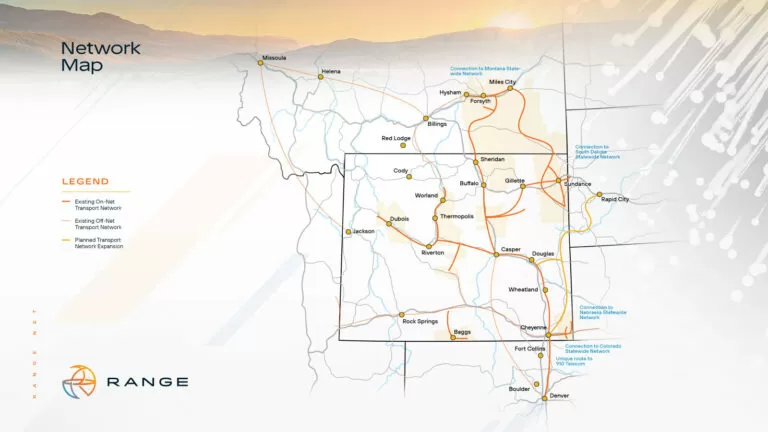
Range supports more than 30 communities in Wyoming and Montana that depend on reliable telecom service. In a large rural footprint, getting a technician to the right site quickly is not always simple, and problems like temperature excursions, utility power events, or equipment failures can escalate if they are not detected early.
"If there was no remote monitoring, we would lose service to customers, businesses, possibly for weeks. That's not good... we have to have monitoring to make sure we stay working." - Curtis Hamer, Range
In addition to customer impact, Hamer emphasized that service interruptions can create regulatory risk: "The FCC won't allow us, we have to have monitoring to make sure we stay working." For Range, remote monitoring is not optional - it is part of how they protect service continuity.
Range standardized on DPS Telecom monitoring to unify alarms and site status into a single operational view. Their solution centers on the T/Mon alarm master, supported by a range of DPS NetGuardian RTU systems and Entry Control Units at remote sites.
"Monitoring equipment and seeing alarms as they happen live helps us troubleshoot problems; it helps us see problems in real time." - Curtis Hamer, Range
Across 60 to 70 telecom sites, T/Mon consolidates incoming alarms and status data so the team can quickly determine what is happening and what needs attention first. With the DPS Telecom monitoring systems in place, Curtis and the Range team closely monitor temperatures, power levels, and the overall health of communications equipment.
Range also uses approximately 150 to 200 DPS Entry Control Units active at their sites. For telecom operations, entry control and door alarms can provide immediate context during troubleshooting (for example, confirming site access events or detecting an unexpected open-door condition that could affect environmental stability).
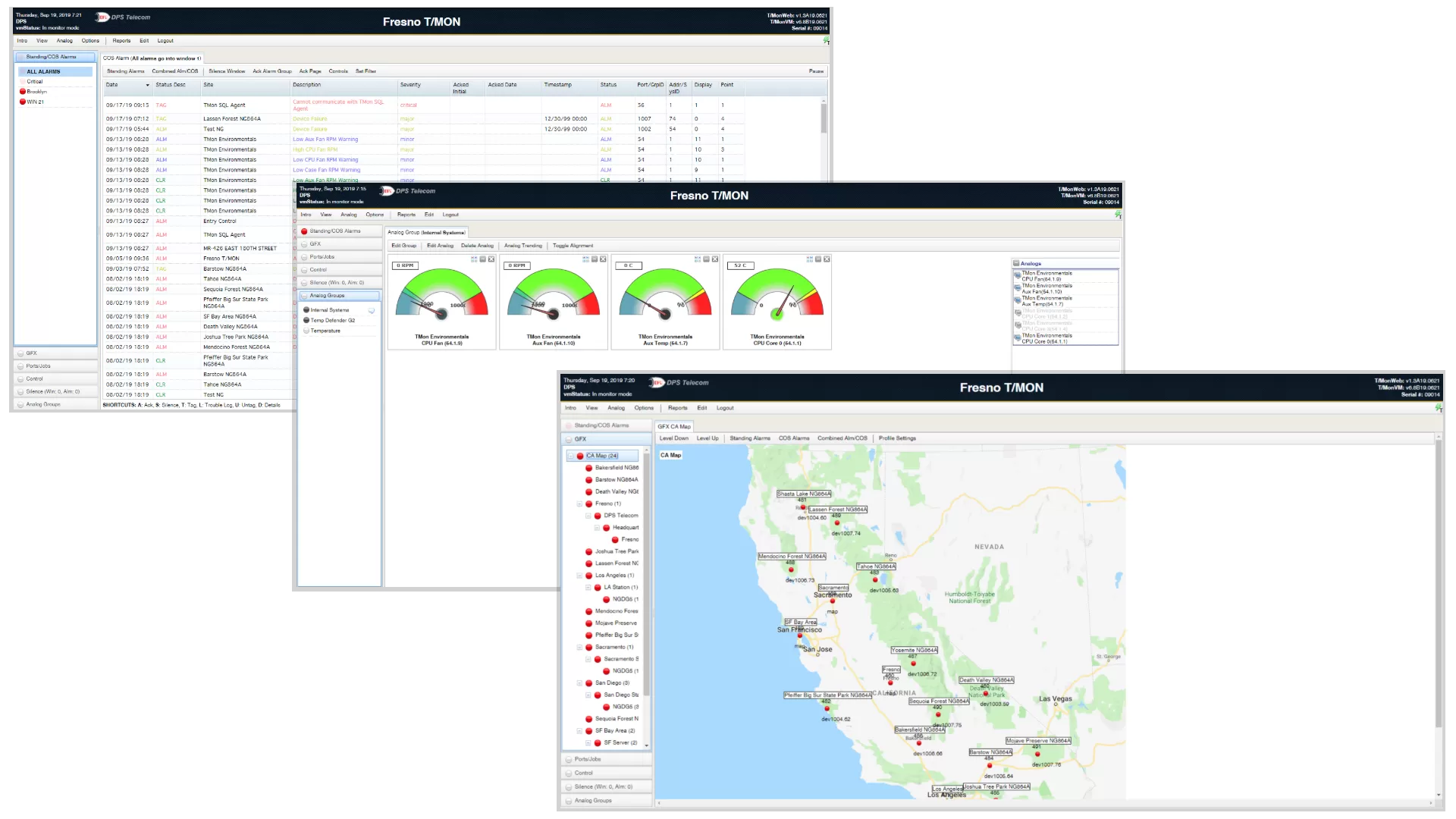
Operationally, this approach aligns with the way DPS Telecom designs monitoring systems for telecom networks:
For organizations like Range that must cover large territories, DPS Telecom solutions are designed to help technical teams reduce guesswork and prioritize action when multiple issues occur at once.
Range uses DPS Telecom monitoring to maintain continuous awareness of site conditions. This is especially important in rural environments where travel time can be significant and a small issue at a remote site can become a larger outage if it goes unnoticed.
Hamer also took advantage of DPS Telecom tuition-free Factory Training to deepen his understanding of the tools and how SNMP works. He noted he was looking forward to bringing Dashboards online to support faster, more visual monitoring for management. He also planned to return to Fresno for Advanced Training in September to continue improving how Range uses DPS remote monitoring solutions.
With T/Mon alarming and DPS site hardware in place, Range can identify developing problems earlier and respond before they become prolonged service-impacting events. The most direct benefit is faster troubleshooting based on live alarms and clear context from the monitoring system.
One example involved a distant equipment failure in Casper, Wyoming. T/Mon alerted the team to an ambient temperature alarm in time to prevent total equipment failure.
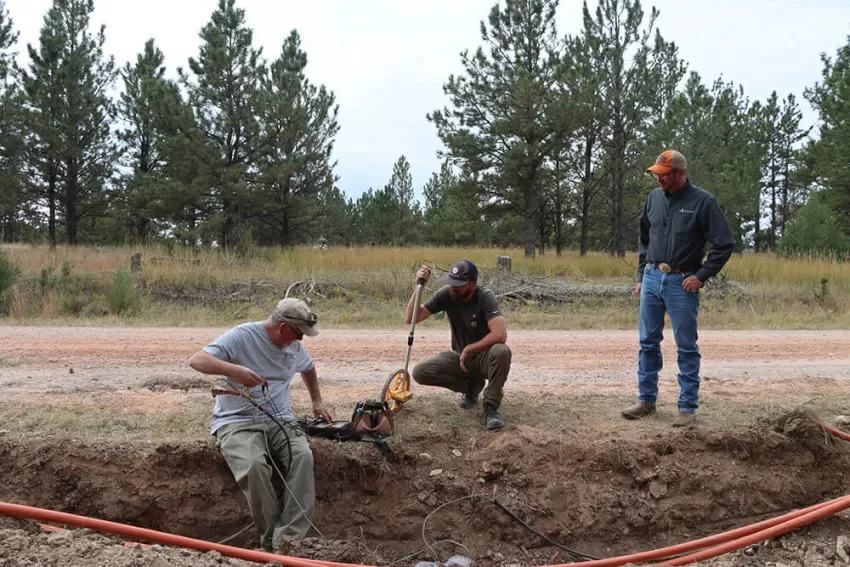
Range also deals with local, real-world causes of outages. According to Curtis, it is not uncommon to have cattle rubbing against poles and causing power outages. In another incident, the team found a wire filled with water from melted ice, which had shorted out a switch. Because the monitoring gear was already in place and alerting in real time, they were able to investigate and resolve the issue quickly.
Beyond the technology, Range highlighted the value of responsive engineering support and practical sales engineering collaboration to keep the monitoring system improving over time.
"One of the reasons I think DPS is great is because of the customer service. It's really good." - Curtis Hamer, Range
Hamer described working with DPS engineering for tech support as straightforward and fast: the team responds quickly, helps answer questions, and explains what they are doing and why. He also worked with Ron, a DPS sales engineer, to manage RMAs, upgrades, and new setups that support Range Communications' ongoing operations.
If your network spans many unmanned facilities, DPS Telecom often recommends combining a NetGuardian RTU at each site with the T/Mon platform at the NOC to consolidate alarms, standardize notifications, and speed response when conditions change.
An alarm master centralizes events from many remote sites into one interface so operators can see alarms as they happen, acknowledge them, and coordinate response. In multi-site telecom networks, the T/Mon platform is commonly used to normalize alarm behavior, route notifications, and keep an audit trail of alarm activity.
In typical telecom deployments, a NetGuardian RTU collects alarms from contact closures (door, generator, rectifier), reads analog values (battery voltage, temperature sensors), and exchanges data over the network using protocols like SNMP. That site data is then sent to the alarm master for display, alerting, and escalation.
Temperature is often an early indicator of HVAC issues, open doors, failed fans, or other conditions that can shorten equipment life or cause immediate service disruption. Range cited a case where an ambient temperature alarm helped them intervene before equipment failure.
Entry control can add door status alarms and access event tracking, giving operators additional context when troubleshooting. For example, unexpected access or an open door can correlate with environmental alarms or other abnormal site behavior.
Organizations typically deploy DPS Telecom monitoring to improve visibility, shorten time-to-detection, and reduce the chance that minor conditions become major outages. Range described live alarm visibility as a key factor that helps them troubleshoot and respond across a wide service territory.
Range Communications uses DPS Telecom monitoring to protect service continuity across a wide rural footprint by detecting issues early and responding quickly. If you need to monitor temperatures, power systems, and site access across many facilities, DPS Telecom can help you design a practical alarm-and-control architecture using T/Mon and NetGuardian RTUs.
Get a Free Consultation or call 1-800-693-0351 to speak with a DPS Telecom expert about your project. You can also email sales@dpstele.com.

Haley Zeigler
Haley is a Technical Marketing Writer at DPS Telecom. She works closely alongside the Sales and Marketing teams, as well as DPS engineers, resulting in a broad understanding of DPS products, clients, and the network monitoring industry.