Download our free Monitoring Fundamentals Tutorial.
An introduction to Monitoring Fundamentals strictly from the perspective of telecom network alarm management.
1-800-693-0351
Have a specific question? Ask our team of expert engineers and get a specific answer!
Sign up for the next DPS Factory Training!
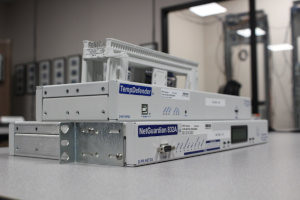
Whether you're new to our equipment or you've used it for years, DPS factory training is the best way to get more from your monitoring.
Reserve Your Seat Today
At Click! Network in Tacoma, Washington, lead broadband technician Ted Van Tuyl needed reliable remote visibility into backup generator status at unmanned hub sites. By using DPS Telecom's Alarm Point Conditioner to convert generator control-panel LED diagnostics into contact-closure alarms, the team gained earlier warning of developing issues and immediately prevented two critical failures.
| Industry | Municipal utility broadband and network services |
|---|---|
| Company / Network | Click! Network (Tacoma, Washington) |
| Company Type | Municipal network services provider supporting utility monitoring plus cable TV and Internet |
| Geography / Coverage | Tacoma, Washington (serving more than 20,000 subscribers) |
| Primary Challenge | Remote, proactive generator readiness monitoring at six unmanned hub sites |
| Solution Deployed | Converted generator LED diagnostic signals to contact closures and transported alarms to the central OSS over existing SONET equipment |
| Key Result | Early warnings detected generator issues that would have otherwise been missed until a start test or power outage, preventing two critical failures |
| Products Used | Alarm Point Conditioner |
Ted Van Tuyl is lead broadband technician for Click! Network of Tacoma, Washington. Click! Network provides electric system monitoring to the municipal utility along with commercial cable TV and wholesale high-speed Internet to over 20,000 subscribers. The network also offers gigabit Ethernet and carrier-class transport services for business customers.
Van Tuyl's search for a custom monitoring solution began with six backup generators at six unmanned hub sites. The hubs power the network, along with battery backed up nodes, supporting high availability expectations.
"Our network is powered from our hub sites and our battery backed up nodes," said Van Tuyl. "Independent of a commercial power failure, our network stays up. Our standard is the same five-nines availability of a traditional telephone company. We're a competitive provider, and we have to be a little better than the other guy."
Van Tuyl needed to know 100% for certain that the generators were ready to run at any time. However, he had no way to verify the generators were OK unless a commercial power failure actually happened.
"I had only one way to monitor the gensets remotely, and all it would tell me was that I had a catastrophic failure. In other words, if the commercial power failed, the generator didn't start, and I was in deep trouble - then I would get an alarm," said Van Tuyl.
"What I needed was a little advance notice, something that would tell me not about critical failure conditions, but about events that might lead to a critical failure."
The frustrating thing was that the gensets provided useful diagnostics at the site - but only on the generator control panel. Van Tuyl could read the alarms by driving to the remote location and looking at the LEDs, which did not support proactive, centralized monitoring.
"The gensets have a boatload of alarms. There's about 10 or 12 different LEDs, for things like low fuel, high temperature, low temperature, oil pressure, and all the other things you normally have an LED for," Van Tuyl said.
Van Tuyl decided to "bring the LEDs" back to the NOC by converting each LED indication into a discrete alarm point (a contact closure), then transporting those alarms to the central OSS using existing SONET equipment.
Van Tuyl had a sound concept but needed a reliable way to interface to LED circuits without interfering with the generator panel electronics. As a practical matter, reading an LED directly can load the circuit and cause inconsistent results, especially when the LED output is a low-current logic-level signal.
"I tried using reed relays, contacts, little transistor circuits, and various other things to bring those LEDs to my SONET equipment. It was loading up the circuit too much to do any good," Van Tuyl said.
Van Tuyl then selected DPS Telecom's Alarm Point Conditioner (APC). The APC is an RTU-sized device that converts 36 CMOS, TTL or bi-polar electrical signals to common-referenced contact closures.
In this application, the APC provided a clean interface between the generator panel LED diagnostics and the alarm transport path. Without modifications, the APC installed easily and worked with both the gensets and the existing SONET gear.
"The Alarm Point Conditioner has been exactly the right tool for this application," Van Tuyl said. "The APC senses the voltage of the LED when it's not operated. When the LED operates, the APC sends an alarm to the SONET."
Many critical devices expose status through non-traditional signals (LEDs, logic outputs, proprietary indicators) rather than dry contacts. DPS Telecom hardware like the Alarm Point Conditioner lets engineers normalize those signals into discrete alarm points. Once you have contact closures, you can carry them into virtually any alarm transport system (including legacy paths) or bring them into a modern RTU for SNMP reporting and centralized alarm management.
The APC also reduced routine manual checks. "Before the APC, I had to rotate people around to check fuel, to check temperatures. Now I don't have to depend on someone driving out there to check them," Van Tuyl said.
Immediately after installation, Van Tuyl's monitoring method proved its value by detecting generator problems early - before an outage forced an emergency response.
Without the Alarm Point Conditioner, Van Tuyl added, those conditions would not have been detected until the generators failed a start test, or possibly not until an actual power outage.
"Getting the Alarm Point Conditioners has been the best money we've ever spent," said Van Tuyl. "What kind of price can you put on a genset that fails in an emergency? I've got millions' worth of equipment sitting out there, and I need to know the genset is going to support it if I need it. It gives me more faith in the reliability and the robustness of our system."
DPS Telecom Alarm Point Conditioner (APC) - Converts 36 CMOS, TTL, or bi-polar signals to common-referenced contact closures for alarm transport and monitoring integration.
If your monitoring challenge extends beyond discrete generator signals, DPS Telecom also offers RTUs and master-station software that can centralize alarm visibility across power, environmental, and network infrastructure. These options are commonly used when you need to aggregate alarms from many sites and present them to operators through SNMP, email/text notifications, dashboards, and escalation workflows.
These are common questions engineering teams ask when converting local equipment indications into actionable remote alarms.
One approach is to convert existing diagnostic signals (such as LED indicators or logic outputs) into discrete contact-closure alarms. DPS Telecom's Alarm Point Conditioner is designed specifically to convert common logic-level signals into contact closures that can be transported and integrated with existing monitoring systems.
LED circuits are typically low-current and may not tolerate additional loading from improvised interface circuits. A dedicated signal-conditioning device is built to sense the signal without disrupting the original circuit operation.
Contact closures are widely supported by alarm collection systems, RTUs, and legacy transport methods. Converting unusual signals into contact closures simplifies integration and helps standardize alarming across different equipment types.
Point conditioning is ideal when you need to normalize signals. If you also need IP-based reporting, alarm distribution, logging, trending analog values, or remote control, a DPS Telecom NetGuardian RTU can collect the conditioned alarms and report them via SNMP to your NMS or to a master station.
If you need to monitor equipment that was not designed for traditional alarm interfaces, DPS Telecom can help you convert real-world signals into actionable remote alarms and integrate them into your existing operations workflow.
Get a Free Consultation or call 1-800-693-0351 to speak with a DPS Telecom expert about your project.