Download our free SNMP White Paper. Featuring SNMP Expert Marshall DenHartog.
This guidebook has been created to give you the information you need to successfully implement SNMP-based alarm monitoring in your network.
1-800-693-0351
Have a specific question? Ask our team of expert engineers and get a specific answer!
Sign up for the next DPS Factory Training!
Whether you're new to our equipment or you've used it for years, DPS factory training is the best way to get more from your monitoring.
Reserve Your Seat TodayARCOM Telecom Ltd. needed to help customers extend SNMP alarm monitoring to remote legacy sites that were too expensive to access and impractical to upgrade. DPS Telecom delivered a legacy-to-SNMP integration approach using the T/Mon IAM Remote Alarm Monitoring System and NetGuardian 832A, enabling centralized NOC visibility without replacing legacy equipment.

| Industry | Telecommunications (remote network operations and alarm monitoring) |
|---|---|
| Company Type | Telecom equipment reseller and EFI service provider |
| Geography/Coverage | Canada - remote coastal sites in Newfoundland; ARCOM based in Dartmouth, Nova Scotia |
| Primary Challenge | Implement SNMP monitoring for legacy equipment at hard-to-access sites where replacing gear was not cost effective |
| Solution Deployed | Legacy alarm mediation to SNMP traps plus SNMP RTU alarming for sites where new monitoring points were needed |
| Key Result | Unified alarm presentation at the NOC while avoiding costly site dispatch and minimizing the need for new equipment at legacy sites |
| Products Used | T/Mon IAM Remote Alarm Monitoring System; NetGuardian 832A |
Robert Lane is a sales manager for ARCOM Telecom Ltd., a telecom equipment and EFI service provider based in Dartmouth, Nova Scotia. Lane's clients operate remote sites scattered over the rugged coastal terrain of Newfoundland, Canada's most northeastern province.
Because these locations are isolated and virtually inaccessible, remote network alarm monitoring is essential for day-to-day operations. But these sites are also filled with legacy transport equipment that, for practical purposes, cannot be replaced.
Lane's customers were moving toward all-SNMP monitoring at their Network Operations Centers (NOCs). The problem was that some remote sites were reachable only by helicopter, so installing new equipment or replacing legacy gear was out of the question.
As Lane explained, alarm collection was critical because the goal was to avoid dispatching technicians. Traveling to these sites often required helicopters and could be prohibitively expensive. The sites were "full of old equipment, old transport, old multiplexers," and the mobilization costs of replacement were simply impossible.
In short, the NOC still needed timely alarms, but the remote infrastructure could not be easily modernized or re-cabled to support native SNMP.
Lane solved the dilemma by delivering a SNMP-legacy integration solution built around the DPS Telecom T/Mon IAM Remote Alarm Monitoring System. The design objective was straightforward: keep the legacy sites in place, collect alarms reliably, and present everything to the NOC as SNMP traps.
"DPS Telecom provided an alarm solution that monitors our clients' legacy equipment, as well as new equipment, and converts the alarms to SNMP format for presentation at their Network Operations Center," Lane said.
The DPS Telecom approach had two parts:
This architecture is a common best practice for mixed-generation networks: keep the legacy interfaces stable, use a centralized alarm management layer to normalize alarms, and present consistent SNMP traps to the NOC for correlation, display, and response workflows.
For teams facing similar constraints, DPS Telecom typically recommends this same pattern: use T/Mon-based alarm collection and mediation to unify legacy contacts/protocols with SNMP presentation, and use NetGuardian RTUs when you need to add modern I/O monitoring (discretes, analogs, and reachability checks) at sites where an RTU install is feasible.
Because the hardest sites were difficult to reach, the core requirement was minimizing field work. The T/Mon IAM solution enabled legacy alarm monitoring without requiring new equipment at those remote sites, while still delivering SNMP traps that could be consumed at the NOC.
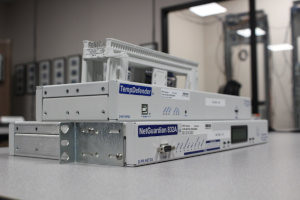
Where the business case supported installing monitoring hardware, the NetGuardian 832A provided a standardized SNMP alarm reporting method for both older and newer locations. That combination allowed Lane to support customers migrating toward standardized SNMP monitoring while continuing to operate legacy infrastructure.
For engineers evaluating similar deployments, two practical considerations usually drive the design:
"When we were looking around the marketplace for different solutions, we found that DPS had the best value and the most flexible product for our needs," Lane said.
Lane also highlighted DPS Telecom's willingness to deliver customer-specific refinements. "Our client's NOC technicians wanted a 'keep-alive' signal on the NetGuardian. We requested that DPS incorporate this feature, and they implemented it. Our customers are extremely happy with that flexibility," Lane said.
Finally, Lane emphasized that DPS Telecom covered the end-to-end monitoring workflow: "The valuable part of DPS Telecom's solution is that it offers an end-to-end solution, not just one piece or building block. Our customers can approach DPS for any part of their alarm gathering, transport, and presentation requirements."
For organizations with remote facilities, this same outcome is often the priority result: clear NOC visibility and dependable alarm reporting without triggering major replacement projects at legacy sites.
T/Mon IAM Remote Alarm Monitoring System - integrates legacy and SNMP alarm monitoring and forwards alarms as SNMP traps to the NOC
NetGuardian 832A - SNMP-based RTU for discrete, analog, and ping alarming with LAN and dial-up connectivity
Call 1-800-693-0351 and ask about legacy-SNMP alarm integration.
Get a Free Consultation to discuss how DPS Telecom can help you integrate legacy alarming, standardize SNMP trap reporting, and reduce the need for costly dispatch to remote sites. You can also call DPS at 1-800-693-0351 to speak with an expert about your project.